
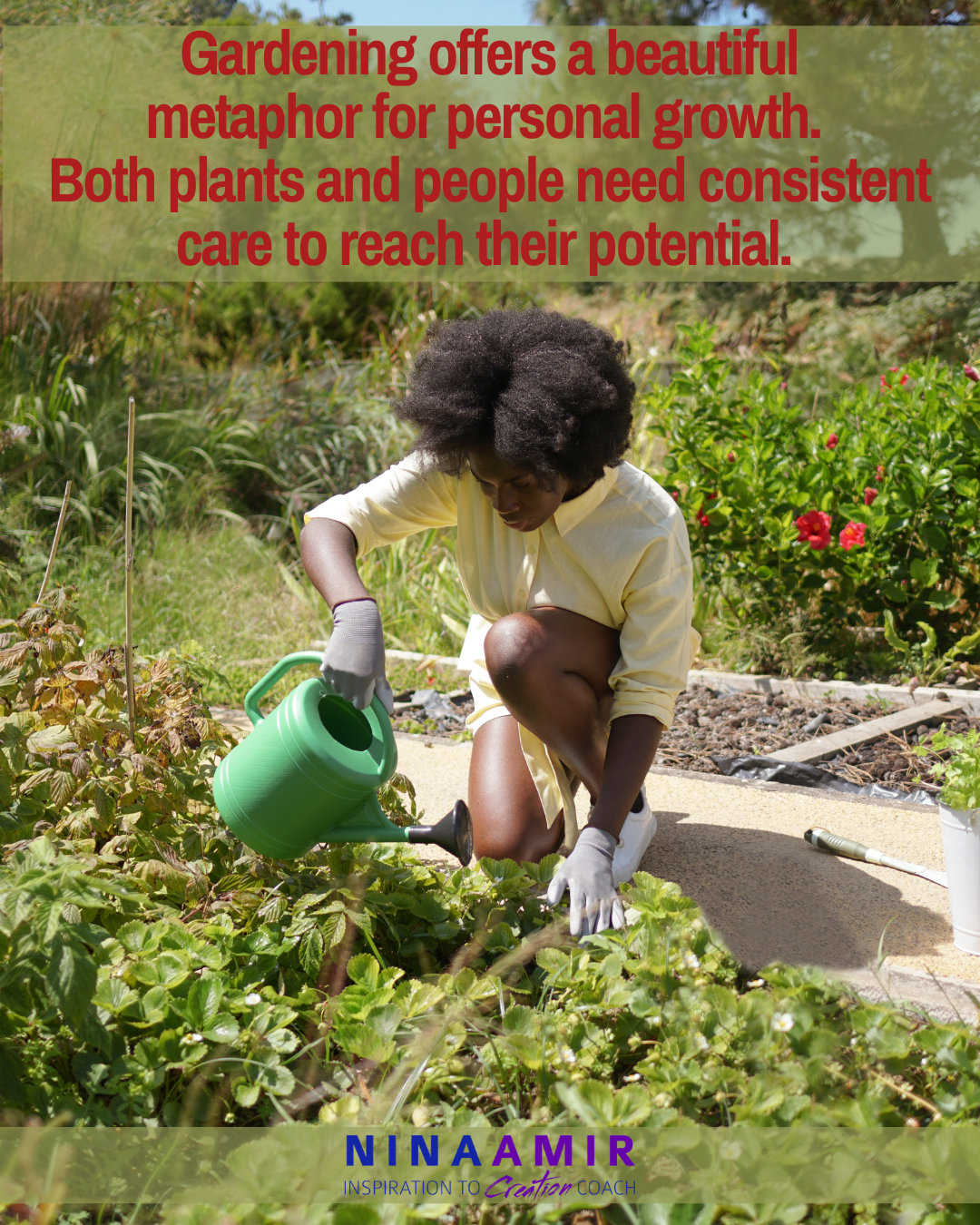
 Gardening offers a beautiful metaphor for personal growth. Plants remind us that transformation doesn’t happen overnight or even where we can see it clearly. Rather, it occurs gradually, intentionally, with care, and sometimes in unexpected ways and places.
Every gardener knows you can’t rush a tomato plant into producing fruit, force a flower to bloom before it’s ready, or even make a seedling sprout or an adult plant thrive. But you can provide consistent care and attention, as well as a supportive environment. Similarly, personal growth is more likely to occur under such conditions.
My Southwestern Garden
When I moved to New Mexico, I knew nothing about Southwestern or desert gardening. Our home had 20-year-old gardens featuring plants that looked like they were on their last season.
I grew up with a mother who adored plants and gardening, and I learned a lot from her. I’ve always considered myself to have something of a green thumb. However, I knew nothing about desert gardening. So, I hired a knowledgeable and well-known landscape designer to create a low-water garden plan, and a year later, had that plan installed.
While some of the plants have done super well, others…not so much. I’ve replanted an ocotillo twice, only to have it die both times. I have planted four o’clocks three times, but they didn’t live either. And my Bird of Paradise plants struggle to thrive, and artichoke agaves look shriveled and unhappy.
We’ve changed the amount of water the plants get. We have moved some to new locations. And we have continued to replace plants that die, hoping that this time they will survive.
My landscaper has told me that these same plants grow well on other nearby properties. Yet some of the plants that seem to love my yard refuse to grow at my neighbors’ homes.
And every once in a while, an unexpected plant peeks through the dirt and becomes happy and healthy even where there is no irrigation.
Go figure.
In a similar fashion, when it comes to personal growth, what works for one person won’t work for another. A process that gets superb results with one client may do nothing for the next. What takes root quickly for someone works slowly, if at all, for someone else, or the conditions aren’t conducive to growth. And, of course, sometimes growth is happening underground, but it’s not apparent.
As I’ve struggled with a few plants in my garden this year and enjoyed the growth and beauty of others—as well as a few surprise “volunteers” that chose to grow in a choice (or not so choice) location. As a Certified High Performance Coach and Transformational Coach, I usually can coach my clients to grow—if they are willing. But sometimes they are “un-coachable,” or don’t really want to grow and change (even though they claim they do). Plants are the same… Sometimes I can coax them to grow; other times, not so much.
In this sense, there are direct similarities between gardening and personal growth. To prove this point, I have “harvested” five lessons that gardening teaches us about personal growth.
1. Growth Starts Beneath the Surface
Before a plant produces leaves, flowers, or fruit, it develops roots underground. We don’t see that growth.
 Personal growth also begins where we can’t see it—internally. Long before others see changes in your life, important developments are happening beneath the surface. You may be building confidence, healing old wounds, learning patience, or shifting your mindset.
Don’t become discouraged because you don’t see immediate results. Like roots growing in darkness beneath the soil’s surface, inner transformation often happens quietly or in small increments before it becomes visible.
Tip: Focus on strengthening your inner life by becoming more aware of your behaviors and thoughts, as well as your beliefs about yourself. Make small changes or take baby steps. Before long, you’ll see the external results.
2. Growth Requires the Right Environment
Plants thrive when they receive proper sunlight, water, nutrients, soil, and space. Even the healthiest seed or plants struggle if they lack one or more of these elements. Sometimes, if they have too much of a “good thing,” like water, they wither and die.
People are no different. Your environment shapes your ability to grow and bear fruit. Relationships, habits, circumstances, experiences, and even the information you consume can nourish, poison, or starve you.
If you find it difficult to change because you don’t have support for doing so, you might need to change your environment. For instance, find new relationships, living conditions, or work. If you constantly feel exhausted, discouraged, or stuck, your environment likely isn’t conducive to growth, let alone thriving.
Tip: Evaluate your surroundings daily to determine if they are helping you grow and thrive. If not, change your circumstances. Spend more time with supportive people, create calming spaces, and feed your mind uplifting content and experiences that encourage growth and well-being.
3. Pruning Is Necessary for New Growth
Gardeners regularly prune plants by trimming dead leaves, overgrown branches, or unhealthy stems. Although pruning can feel harsh, it helps the plant become stronger and healthier. Without dead or dying limbs or blooms, the rest of the plant can muster the energy to revive itself.
 People need to prune themselves and their lives so they can gain new strength, too. Sometimes you must cut off habits, beliefs, commitments, or relationships that no longer serve who you are becoming. As mentioned, you also might need to prune out unsupportive relationships or situations that cause anxiety or unhappiness. It can feel difficult to let these things go or create boundaries around your wellbeing, but doing so creates the space and healing that allows you to change and thrive.
Tip: What in your life drains your energy or keeps you stuck? These are the things, situations, and people you need to prune. Letting go of even one thing creates a space for something new to enter your life and help you flourish.
4. Every Plant Grows at Its Own Pace
Some plants sprout within days. Others take months or even years to mature. A gardener understands that each plant has its own timeline, which can’t be rushed. Just because the rose bush is already blooming doesn’t mean the squash plants should already have yielded a crop.
In life, comparison to other people’s growth can make you feel slow or behind. You look at others’ achievements and wonder why your own progress appears so much slower. But growth is not a race, and each person moves toward transformation at their own pace.
Your journey is unique. Your challenges, lessons, and circumstances are different from anyone else’s. Just because your progress looks different does not mean it is less meaningful or isn’t happening in exactly the right timing.
Tip: Stop measuring your growth against other people’s transformational timelines. Only compare yourself to yourself. And don’t forget to celebrate your achievements—great and small. Trust your own process is perfect.
5. Consistency Matters More Than Perfection
Regular care helps plants flourish. You can’t expect a gorgeous yard to result from one day of intense effort followed by months of neglect. Small, consistent actions over time create a thriving garden.
Similarly, you do not need to transform your entire self or life overnight. Tiny, consistent actions, like practicing gratitude, meditating, exercising, or speaking kindly to yourself, can lead to profound change.
Growth requires consistency, not perfection. As with learning anything new, the more regularly you practice, the better you become at that activity.
Tip: Choose one simple daily habit or mindset that supports becoming the person you want to become. Commit to that habit or mindset, practicing it consistently but never expecting perfection…just progress. Be that person daily. That’s how you create change.
Harvesting Your Results
Gardening reminds us that growth is natural, cyclical, and unpredictable. Plants follow the seasons. They go into hibernation in the winter, sprout anew in the spring, produce fruit or blooms in the summer, and then lose their leaves and begin the process again.
Human growth follows similar rhythms. You experience seasons when you feel stuck, buried beneath challenges, and unable to poke your head above the ground. Then your energy grows, and you poke your head out of the dirt and begin to take new action. This causes you to blossom into someone entirely new and create amazing results from your efforts. And then, you find your energy waning, and you go back into a dormant phase only to find yourself renewed and ready to begin again.
But both plants and people need consistent care to reach their potential. A supportive garden environment eventually produces healthy plants that yield fruit for harvest. These could be rose blooms, ripe tomatoes, or the simple pleasure of enjoying the smells and sights in your yard. A person who lives in supportive conditions also will grow, become healthy, and reap the results they desire.
Are you using these gardening lessons to help you achieve personal growth? Tell me in a comment below. Please share this post with those who may benefit from reading it.
Image courtesy of carballo.